
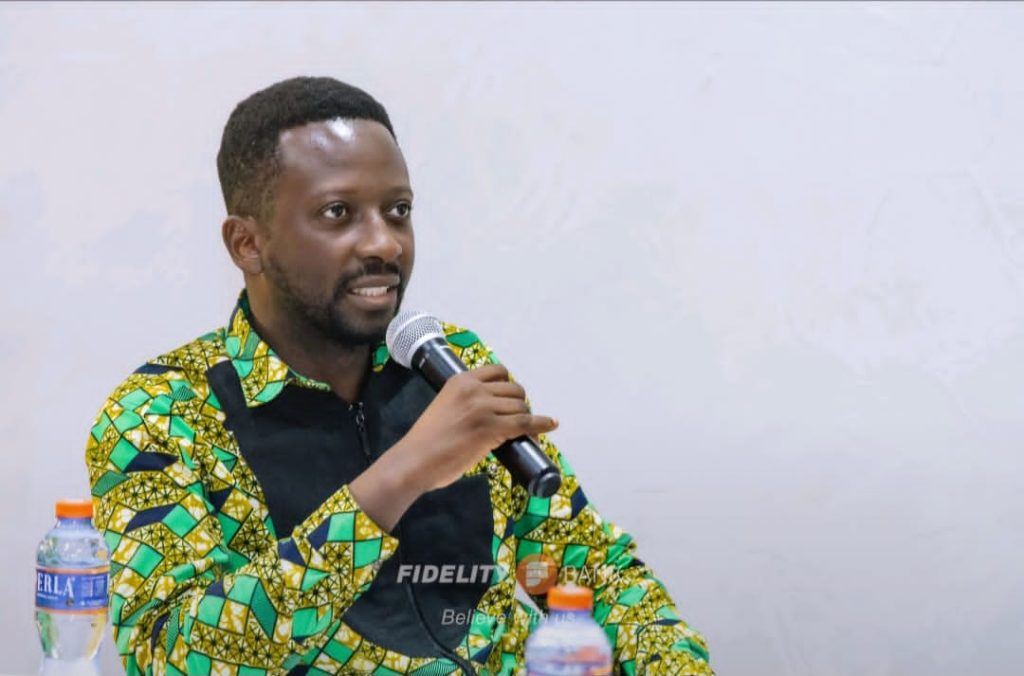
Some people enter your life so quietly that you almost miss the moment it happens. There is no dramatic announcement, no obvious sign that something significant is beginning. They simply appear, say something that catches your attention, do something that stays with you, and before you fully realise what has happened, they have become one of the most important people in your world. That is my story with William Laari, affectionately known by those who love him as Willie.
I want to tell that story honestly, because Willie deserves honesty more than he deserves flattery, and anyone who knows him well will understand exactly why I say that.
Our paths first crossed around 2011 at the University of Professional Studies, Accra. I was serving as Administrative Assistant at the School of Research and Graduate Studies at the time. The campus was busy, the days were full, and the names and faces of students blurred into one another with the predictable rhythm of institutional life. I had never met William Laari. I had never even heard his name.
Then one afternoon, a political programme was taking place just behind my office. I could hear everything from where I sat. One of the major political parties on campus was holding its handing over ceremony, and William, a student leader from an entirely different political tradition, had been invited to deliver a solidarity message. I was only half paying attention until the moment he began to speak.
What I witnessed next stopped me completely.
Dressed in the colours of his own party, standing before an audience that belonged to another, he could have done what most young people in that position would sensibly do. He could have offered warm congratulations, said the comfortable things, smiled diplomatically, and returned to his seat having offended no one and challenged nothing. That would have been the easy path. That would have been the safe path. Instead, he walked to that podium and spoke uncomfortable truths, directly and without apology, to the very people who had extended him the courtesy of an invitation.
I had read about what it means to speak truth to power. I had encountered the phrase in books, heard it celebrated in speeches, watched it romanticised in films. But watching a young man stand before a crowd with no performance of bravado, no calculation of consequence, and simply say what he believed needed to be said, was something I had never quite experienced before. It was not dramatic. It was not theatrical. That was precisely what made it so extraordinary. He was not performing courage. He simply was courageous.
I was fascinated by him before he had finished speaking.
The moment the programme ended, I asked a mutual friend to bring him to my office. When he arrived and sat across from me, I looked at him and asked the most direct question I could think of.
“Why would you do that?”
He looked at me with what I can only describe as genuine puzzlement. It was the look of a person who has been asked to explain why they breathe. To him, nothing remarkable had occurred. He had said what he believed needed to be said. He had gone where he was invited and spoken what was true. That was simply who he was. The gap between what I had witnessed and how unremarkable it felt to him told me more about his character than any answer he could have given.
I admired that courage deeply, even as I cautioned him about the risks that so frequently accompany uncommon honesty in environments where conformity is safer and more rewarded. It became clear, very quickly, that fear was not a language William Laari had ever found particularly useful. He acknowledged the risks with the calm of someone who had already considered them and made his peace with what they required of him.
That conversation was the beginning of something neither of us planned and both of us needed.
We exchanged numbers. We stayed in touch. We had more conversations, deeper ones, and across the months and years that followed, the friendship that began in the aftermath of a political ceremony on a university campus became something far more substantial. We became brothers. Not in the biological sense, but in the sense that matters more, the sense that is chosen rather than inherited, tested rather than assumed, and proven through the ordinary and extraordinary moments of shared life.
Years later, when I had the privilege of serving as Consulting General Manager of a radio station, Willie was among the very few people I deliberately invited into our strategic discussions. I would jokingly refer to him as my left brain, and the description was more accurate than the laughter it provoked. When an idea had been presented and the room seemed satisfied, when everyone else was nodding and preparing to move forward, Willie would ask the question that nobody else had thought to ask. He had an instinctive and persistent ability to identify what was missing, what was fragile, what had been assumed rather than verified, and what would break under the pressure of real-world implementation. He never criticised for the pleasure of criticism. He challenged because he was genuinely committed to the outcome being better than it currently was. The distinction matters enormously, and it is one that not every sharp mind understands.
When I later decided to move to Cedar Mountain Chapel Assemblies of God, I encouraged him to come along. He came without hesitation, and without making a fuss about it. That simple act of loyalty reminded me of something I have always believed about the nature of true friendship. Real relationships are not maintained by words alone. They are sustained by the small and large decisions that people make to show up, to follow, to stand beside, even when it would be perfectly understandable not to.
And speaking of showing up, let me tell you about the day of my first child’s naming ceremony.
Anyone who knows where I live understands that getting to the venue was not exactly a short and easy journey. It was the kind of distance that gives people a reasonable excuse to arrive late, or to send a message saying they are on their way when they have not yet left their house. Willie gave himself no such excuse. He arrived early. Not on time. Early. He was already at the venue making sure everything was in order before I even got there, quietly arranging things and ensuring that the day would go smoothly for me and my family. No fanfare. No request for acknowledgement. He simply saw what needed to be done and did it.
That is who Willie is.
He has always been in the picture when it involves me or my family. Not occasionally. Not when it is convenient. Always. There is a kind of friendship that shows up for the big, public moments and disappears when the quieter, less celebrated ones arrive. Willie has never been that kind of friend. He has been present in the moments that matter and in the moments that nobody outside the family would ever notice or applaud. That consistency, sustained across years without being asked for or negotiated, is one of the most meaningful things one person can offer another.
If I were to describe William Laari in a single quality, I would not hesitate for a moment. He is one of the most genuinely honest people I have ever encountered in my life.
This is not a simple compliment. Honesty, in the form that Willie embodies it, is not a pleasant personality trait that makes him enjoyable at social gatherings, though he is that too. It is a deeply held conviction that the truth is a greater gift to the people you love and respect than any comfortable reassurance you could offer them instead. If you bring Willie an idea that is flawed, he will tell you it is flawed. If you share a plan that has a significant gap in its reasoning, he will find that gap and name it clearly. If you are about to make a decision that he genuinely believes will cost you more than you have calculated, he will say so, not unkindly, but honestly, because he believes that honesty, however temporarily uncomfortable, serves you better than silence dressed up as support.
In an age when so many people carefully manage every word they speak, calculating how much truth can be expressed before a relationship is endangered or an opportunity is compromised, Willie remains committed to the unfashionable position that truth matters more than comfort. He can look anyone in the eye, regardless of their age, their status, their wealth, or the authority of their title, and speak plainly without trembling, without apologising, and without the subtle performance of diplomatic ambiguity that passes, in many environments, for tact. I have watched him do this more times than I can count, and the consistency of it still moves me. It is extraordinarily rare.
What makes his honesty even more remarkable is that it is never cruel. There are people in this world who use honesty as a weapon, whose directness is really a sophisticated form of aggression dressed in the language of truth-telling. Willie is not one of those people. His honesty comes from a place of genuine care for the person he is speaking to and genuine respect for what truth makes possible between people who are willing to receive it. He tells you the truth because he values you enough to believe you can handle it, and because he values the relationship enough to refuse to build it on anything less solid.
He is also, and I do not use this word lightly, a contented man.
Contentment is perhaps one of the most underrated virtues of our time. We live in an era that glorifies comparison, that measures personal value through the visible evidence of accumulation, that celebrates those who want more and casts a quiet suspicion upon those who seem satisfied with what they have. Willie has never seemed particularly interested in that competition. He does not measure his life against yours. He is not distracted by what others own or where they work or the prestige of the titles they carry. He competes, if competition is even the right word, only with the version of himself that existed yesterday. His ambition is personal, his progress is intentional, and his satisfaction is real rather than performed.
That kind of contentment is a genuine form of freedom, and it is far harder to achieve than the accumulation of things that many people pursue in its place. It requires a settled sense of identity that does not need external validation to remain secure. It requires the maturity to distinguish between what you genuinely want and what the world around you has convinced you that you should want. Willie has that settledness in a way that I have genuinely admired and, on more than one occasion, quietly learned from.
He is also a man of extraordinary loyalty, and I want to be careful here, because Willie’s loyalty is not the passive, unconditional variety that requires nothing of either party and means very little in practice. His loyalty is active. It shows up. It makes decisions. It chooses, repeatedly and sometimes at personal cost, to stand beside the people and the principles it has committed to.
Now, I must pause here and be very honest with you about something, because I would be doing you a serious disservice if I left it out.
Do not argue with Willie.
I mean this with all the love and sincerity I have expressed throughout this piece. If you value your peace of mind, your confidence, and your reputation in whatever room you happen to be standing in, do not get into a debate with William Laari. The man is intelligent in a way that is almost unfair. He reads. He thinks. He processes information quickly, structures his arguments carefully, and selects his words with the kind of precision that should honestly make people nervous before they open their mouths to challenge him. He does not just win arguments. He dismantles them, quietly, methodically, and with a calm that somehow makes the experience even more humbling for the person on the receiving end.
And if you are foolish enough to provoke him beyond a certain point, his mouth will find you. I say this with full affection and zero exaggeration. Willie can say something to you in two sentences that will leave you standing there wondering whether you need to call your pastor, your therapist, or both. His words, when he decides to deploy them in that particular way, do not just sting. They locate something specific and they stay there. People have walked away from encounters with an agitated Willie needing what I can only describe as a full spiritual intervention. His mouth is genuinely painful, and I say that as someone who is very glad to be on his good side.
The good news is that he does not use that gift carelessly or without justification. He is not someone who looks for conflict or enjoys making people feel small. But if you come for him, or for the people he loves, be very sure you are prepared for what comes back. You have been warned, with warmth and complete sincerity.
When I think about what leadership actually means, I find myself returning less and less to the conventional images of authority, position, and public recognition. Real leadership, the kind that outlasts the titles and survives the seasons of difficulty, is a matter of character. It is honesty that holds even when dishonesty would be easier. It is courage that speaks even when silence would be safer. It is contentment that does not diminish ambition but frees it from the distorting pressure of comparison. It is loyalty that chooses rather than merely tolerates. It is the willingness to show up for a naming ceremony at a venue far from home, earlier than anyone expected, just to make sure everything is ready for someone you love. These are the qualities I have seen, consistently and without performance, in William Laari across the years of our friendship.
Willie, I want you to know something that I hope you already feel but that deserves to be said plainly and in writing.
You have been a gift to my life in ways that I am not sure I have always expressed adequately. You have made me think more carefully, more honestly, and more courageously than I would have managed without the steady influence of your friendship. You have shown me, by example rather than by instruction, what it looks like to remain true to yourself in a world that applies constant pressure on people to become someone more convenient, more accommodating, and less honestly themselves.
Thank you for the courage that first caught my attention on that afternoon in 2011. Thank you for the honesty that has served me, challenged me, and occasionally startled me in the years since. Thank you for the loyalty that has shown up, quietly and reliably, across the seasons of a friendship I count among the most valuable things in my life. Thank you for arriving early when it mattered. Thank you for always being in the picture when it involves me and my family. Thank you for asking the questions that nobody else in the room was willing to ask, and for doing so in the service of something better.
Thank you, most of all, for becoming more than a friend.
Thank you for becoming a brother.
May God preserve your voice and protect the rare and beautiful honesty with which it speaks. May He strengthen the convictions that have defined you and reward, in ways both visible and invisible, the integrity with which you have chosen to live. May the years ahead bring you the kind of deep and lasting joy that only a man truly at peace with himself is able to fully receive.
You deserve every bit of it, my brother. Every single bit.