
Is what we experience in Ghana truly health care?
It is an uncomfortable question, but it refuses to go away.
For many citizens, a visit to a hospital does not bring reassurance. It brings anxiety. Not only because of illness, but because of what awaits on arrival. You prepare not just for treatment, but for delay, indifference, and sometimes quiet humiliation.
There is a troubling pattern in the conduct of some health care providers. Patients are too often received as though they have come to interrupt rather than to seek help. The tone is dismissive. The posture suggests that care is a favour, not a duty. Urgency disappears. Empathy feels absent. You begin to wonder whether patients are seen as people in need or as inconveniences in a long shift.
Yes, there are exceptions. There are professionals who listen, who act, who treat patients with dignity. Their presence reminds us that good care is possible. But for many, these encounters are rare. The negative experiences remain more common, more consistent, and more damaging.
This raises difficult questions. Were these individuals forced into the profession? Has the system shaped their attitude over time? Are working conditions so discouraging that compassion slowly disappears?
A Personal Moment That Refuses to Leave
I remember one experience clearly.
My son had been running a high temperature through the night. We tried first aid at a nearby pharmacy, but nothing worked. The night was long. Sleep did not come. Fear sat quietly in the room.
By morning, we were exhausted. Worried. Emotionally drained.
When we arrived at the hospital, what we needed most was simple. Calm. Reassurance. Urgency.
Instead, we were met with rudeness.
No effort to ease the tension. No recognition of the anxiety we carried. Just coldness at a moment that required care.
That moment stays with you. Not because of the illness, but because of how it made you feel.
And it is not an isolated experience.
When Expectations Begin to Fall
Over time, many Ghanaians have adjusted. We lower our expectations before we even enter a health facility. We prepare ourselves mentally for indifference. We tell ourselves, “This is how it is.”
But something changes when you experience health care outside Ghana.
What stands out is not only the system, but the attitude. The professionalism. The respect. The urgency.
And often, the people delivering that care are Ghanaians.
So the question becomes unavoidable.
What changes when they leave?
Is it accountability?
Is it supervision?
Is it better systems?
Or is it simply that the environment demands a higher standard?
Ghana at 69, But With a Failing Health System
Ghana is 69 years old.
At this stage, we should be speaking of progress, of maturity, of systems that work.
Instead, we are still asking whether we have a health care system that can reliably care for its people.
Let us be honest.
At times, it feels as though we have very little to call a system.
Is this not something that should bring a sense of shame?
Do those in leadership not feel it when they leave this country, travel abroad, and experience what proper health care looks like?
Do they not notice the difference?
Do they not feel the contrast between what exists there and what they oversee here?
Or have we become so accustomed to it that it no longer troubles us?
A System That Cannot Carry Its People
We hear stories that should never be normal.
A patient involved in an accident lying on the floor for seven hours because there is no bed.
Seven hours.
Not because the case was minor. Not because help was unnecessary. But because the system had no space.
Yet at the same time, fleets of V8 vehicles sit parked. Expensive. Maintained. Available.
The contrast is difficult to ignore.
A patient waits on the floor.
A vehicle waits in a parking lot.
One is a matter of life.
The other is a matter of comfort.
The Question of Priorities
We are told resources are limited.
Yet resources are found when it comes to vehicles, travel, and official comfort.
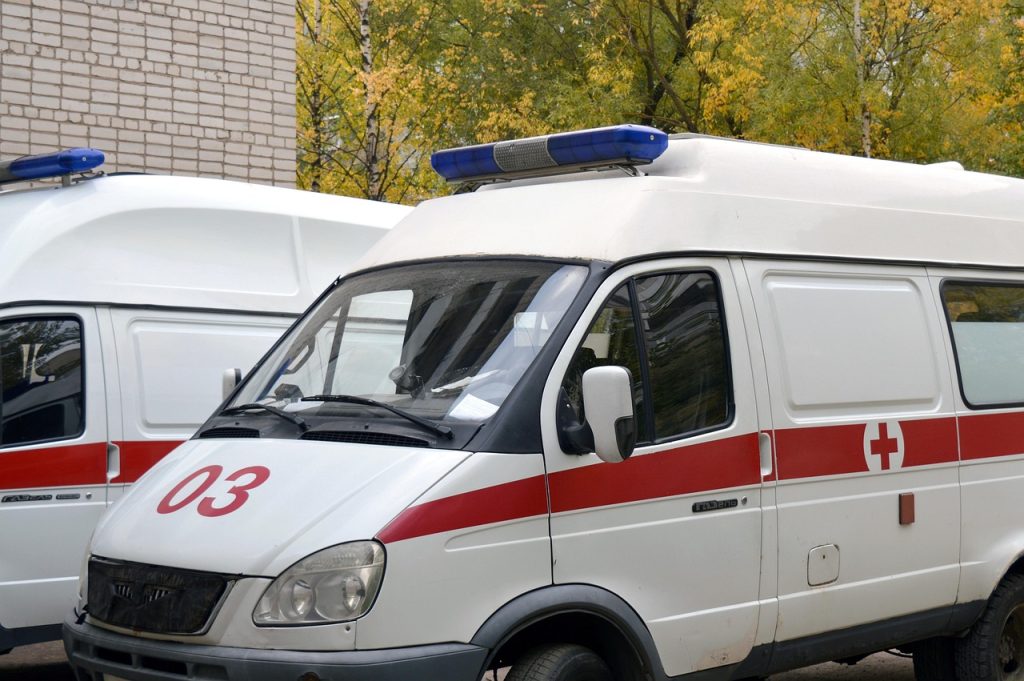
We debate ambulances as if they are luxury items. We celebrate their procurement as major achievements, when in reality they should be basic expectations. Even then, maintenance is neglected, and systems remain weak.
So the question must be asked.
Are hospital beds more expensive than vehicles?
Are medical facilities more costly than private jets?
Are lives less important than comfort?
Even at the risk of sounding cynical, these are necessary questions.
When Leaders Seek Care Elsewhere
Perhaps the most painful reality is this.
When those in leadership face serious health challenges, they do not rely on the system they oversee. They travel abroad. They seek treatment in places where systems function, where care is reliable, where urgency is understood.
They go there with public resources.
They experience quality care firsthand.
So the question becomes sharper.
If they know what good health care looks like, why does that standard not exist here?
Is it that we lack the personnel?
But many of the professionals in those systems are Ghanaians.
If it is about training, what will it take to train our own to that level here?
Or is it about infrastructure and equipment?
If so, can we truly say we cannot afford them?
Or is it simply that we have chosen not to prioritise them?
This Is Bigger Than Politics
This issue must not be reduced to politics.
It is not about one government.
It is not about one party.
It is not about scoring points.
If you see this as an opportunity to make one side look bad and another look good, then you have missed the point entirely.
Shame on that thinking.
Because illness does not ask for political affiliation.
An emergency does not wait for elections.
No one knows when they or someone they love may need urgent care. And in its current state, the system cannot always be trusted to respond.
This concerns all of us.
A Call for Responsibility
The way forward requires honesty.
Health workers must remember the core of their calling. Skill alone is not enough. Care, patience, and empathy are essential.
Leadership must move beyond promises. Real investment. Real accountability. Real priorities.
Systems must be strengthened. Standards must be enforced. Excellence must be expected.
And as citizens, we must refuse to accept this as normal.
A Final Reflection
Health care is not a privilege. It is not a favour. It is a basic right.
Ghana at 69 should not be asking whether it has a functioning health system.
It should be demonstrating one.
What is needed now is more than policy. It is purpose.
Leadership that understands the weight of responsibility.
Professionals who remember the meaning of care.
And a collective demand for a system that reflects both competence and humanity.
Because in the end, this is not just about hospitals.
It is about life.