
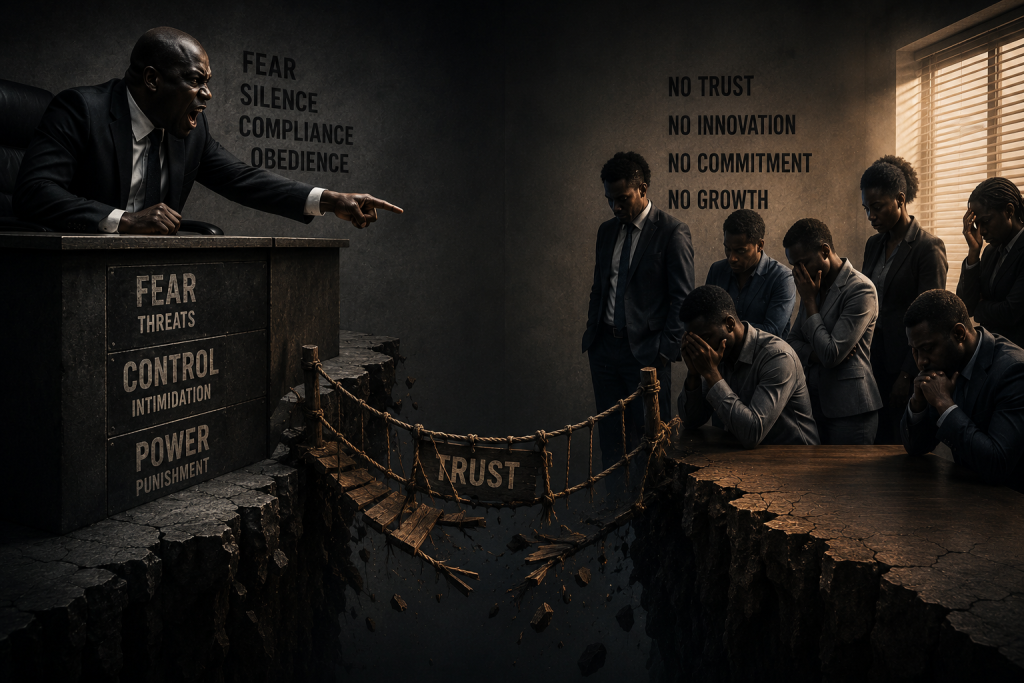
Leadership is built on influence, not intimidation. Yet one of the greatest mistakes some leaders make is believing that people who fear them are loyal to them. They mistake silence for respect, obedience for commitment, and compliance for trust. These are not the same.
Fear can make people follow instructions. Only trust makes people follow a leader. The difference is profound. A loyal follower remains committed even when the leader is absent. A fearful follower behaves differently the moment the leader leaves the room. Fear changes behaviour. Loyalty changes the heart.
Many leaders never discover this distinction because they occupy positions of authority. Their titles give them power to reward, promote, discipline, or dismiss people, and as a result, employees, church members, students, volunteers, or even family members become careful with what they say. They laugh at jokes that are not funny. They agree with ideas they privately disagree with. They praise decisions they know are flawed. Not because they admire the leader, but because they fear the consequences of honesty.
This creates one of the most dangerous environments any leader can have: an environment where nobody tells the truth. The leader begins to believe they are widely admired because no one openly challenges them. Meetings become quieter. Criticism disappears. People seem cooperative. Everything appears peaceful. But beneath the surface, something very different is happening. People are not speaking because they have stopped believing their opinions matter. Some are simply waiting for another opportunity. Others have already decided to leave.
The leader mistakes the absence of conflict for the presence of loyalty. Nothing could be further from the truth. Fear produces compliance only while the source of fear remains powerful. The moment that power weakens, the illusion disappears.
History is filled with leaders who seemed untouchable while they held authority, surrounded by praise, applause, and public admiration. Then they retired. They lost the election. They left the office. They resigned. Suddenly, the people who once applauded became silent. Some disappeared completely. Others openly criticised the very leader they once celebrated. The loyalty was never real. It belonged to the position, not the person. True loyalty survives titles. Fear survives only while power exists.
This misunderstanding affects leaders in every sphere of life. It affects entrepreneurs who believe employees are devoted because nobody questions them, pastors who mistake unquestioning agreement for spiritual respect, academics who assume students admire them because they remain silent, and managers who believe their teams are united simply because nobody complains. Sometimes the people who smile most in front of a leader speak most honestly after the leader has gone. That should concern every leader.
Leadership should create enough safety for people to disagree respectfully. When followers cannot express concern without fear of punishment, the leader loses access to the very information needed to improve. Healthy leaders welcome uncomfortable truths. Insecure leaders silence them. A leader who is never questioned is a leader who is slowly becoming isolated.
The strongest leaders are not those who command the most fear. They are those who inspire the deepest trust. Their followers speak honestly because they know they will be heard. They admit mistakes because they know they will be treated fairly. They contribute ideas because they know they will not be ridiculed. They remain loyal because they respect the leader, not because they fear the consequences of leaving.
Every leader should occasionally ask a difficult question: “If I no longer held this position, how many of these relationships would remain?” The answer reveals whether people are connected to the office or to the individual.
Power can force obedience. It cannot force loyalty. Titles can command attention. They cannot command respect. Fear may fill a room with silence. Only trust fills it with commitment.
The greatest leaders are remembered not because people feared them, but because people willingly followed them long after they no longer had the power to make them do so. That is the true measure of leadership: when people stay because they want to, not because they have to.