
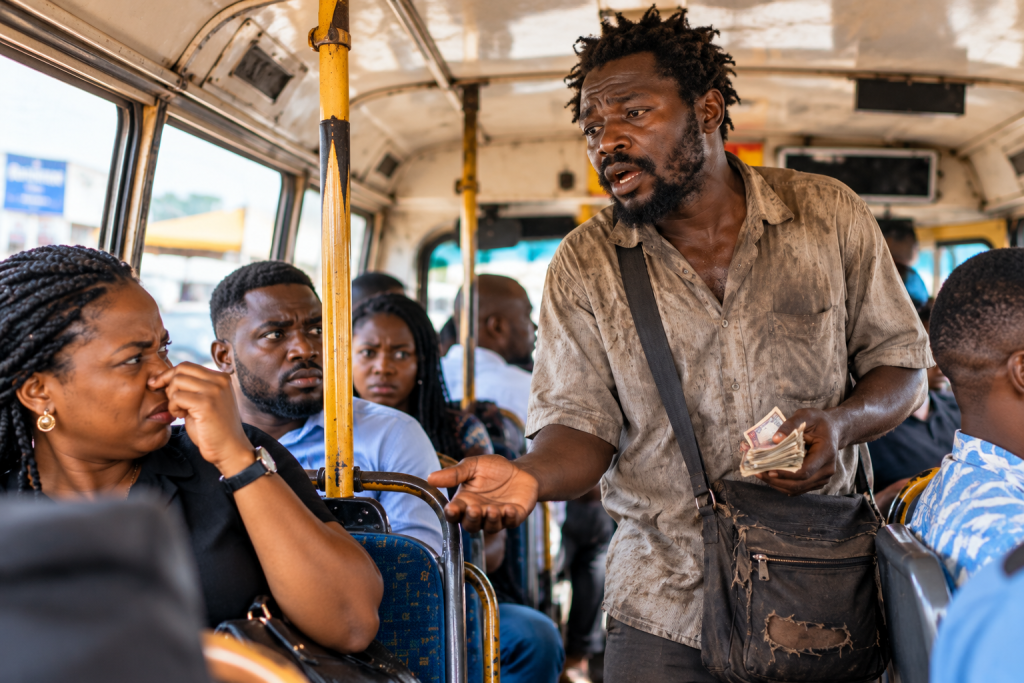
A friendly plea from a passenger whose nose has seen too much
Some experiences in life you never forget. Your first love. Your first heartbreak. Your first salary, which disappeared faster than it arrived. And certain smells you meet in a Ghanaian trotro.
I am now convinced that the human nose has a better memory than the human brain. There are things that happened twenty years ago that I have forgotten completely. But some trotro journeys? Ei! My nose remembers everything, with dates, times and bus stops.
Let me say this first, so that nobody calls me names on the radio. Our trotro mates and motorbike riders work very hard. They spend long hours under the Ghanaian sun, wrestling with traffic, potholes, change that nobody has and passengers who say “driver, I’m coming” and are never coming. They keep this country moving, and we appreciate them.
But, my brothers, I have a small request that I believe many passengers will quietly support. Let us give soap and water a little more attention.
The mate’s raised hand
You know how it goes. You find your seat, settle down and begin to enjoy the journey. The radio is playing something nice. Life is good. Then the mate comes to collect fares.
He raises his hand.
And suddenly you remember that life is full of unexpected challenges.
You are holding your money, ready to pay, but your nose has started asking questions that your mouth is too polite to ask. You want to say, “Boss, please, can I pay without the special effects?”
But you say nothing. You pay your fare, turn to the window and pray for a breeze. Sometimes you even start admiring the passengers by the door. They can escape at the next stop. You, in the middle seat, are not on a journey any more. You are on a test of endurance, and nobody gave you the syllabus.
The okada that humbled me
I used to think those days were behind me. By the grace of God, I became a driver and no longer have to depend on trotro for every journey. I thought I had entered my season of peace. I was walking around like a man with a testimony.
Then, this week, I needed to go somewhere in a hurry and had to take a motorbike.
My friends, I climbed on that bike with a peaceful heart and reasonable expectations. I came down with a different story.
The rider had a very strong body odour. At that speed, with my face about a hand’s width from his back, there was no escape, no window to turn to and no door to move near. By the end of the journey, my stomach had resigned from the whole arrangement. I will spare you the details, except to say that my breakfast and I parted ways in public, and it was not a dignified goodbye.
How does a ten-minute ride become a full medical emergency?
Even worse, I could still smell it on my trousers afterwards. I began to suspect that the journey came with a complimentary fragrance and nobody had told me. I have paid fares before, but this was the first time I felt I had travelled with an extra passenger. The smell followed me home, took off its shoes and sat in my living room.
A fair word to my friends on the road
Now, let me be fair. I understand that Ghana is hot. These men work outdoors for hours, in sun, dust and exhaust fumes. Sweating is natural. Nobody expects a trotro mate to step out of the bus smelling like an air-conditioned perfume shop at Accra Mall. A hard-working man should not be mocked for sweat. And I know that clean water, a changing room and a place to wash are not always easy to find when you are on the road from five in the morning to ten at night.
So the request is not for perfection. It is for a little extra care. A bath before work, a clean shirt, a quick wash at midday if possible and a bit of deodorant would go a long way. In a hot country, these are acts of respect for the people who sit behind you, and I say this as a man who has also had his bad days.
The shared responsibility
This is not just a matter for the mates and riders. If we want clean transport, we must help make it possible.
Transport unions and the relevant authorities could include personal hygiene in their public education and driver training programmes. Lorry parks and terminals could provide better washing facilities and clean toilets for workers who spend long hours outside. A friendly poster at the station would not hurt either: “Today’s special: fresh shirt.” And we passengers must play our part too, by being kind and polite, because nobody improves after being shamed in front of a full bus.
And please, government, I am not asking for a new ministry. We can manage this one without setting up the Ministry of Soap and Armpits!
Thank you, and please
To our dear trotro mates and okada riders, thank you for the work you do. Without you, half of Accra would be late, and the other half would be walking. This is only a friendly reminder that a pleasant journey involves more than arriving safely.
After all, we can tolerate traffic. We can tolerate potholes. We can even tolerate the mate shouting “Circle! Circle! Circle!” when we are already sitting inside the vehicle that is going to Circle.
But if we can arrive with our stomachs settled and our noses at peace, everybody wins.
The roads may test our patience. The traffic may test our faith. But a Ghanaian nose should not have to write its own survival story.