
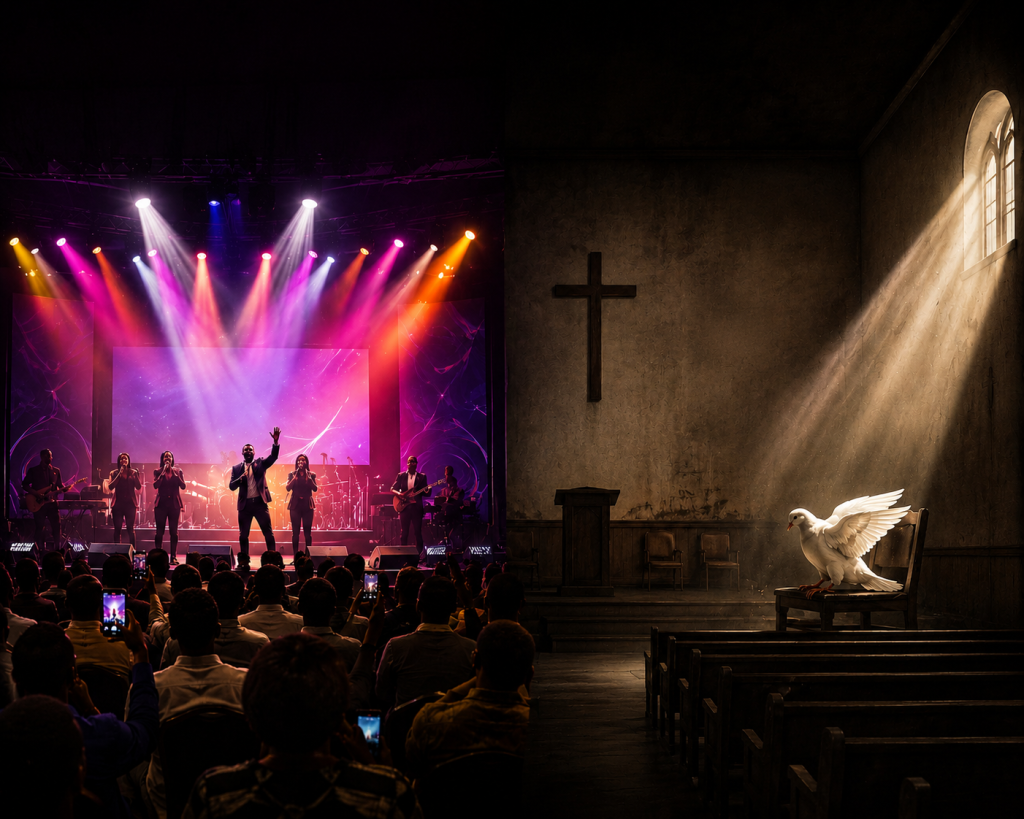
The word “church” has lost much of its original meaning in modern conversation. To many people, it is a building, an institution, a denomination, or a weekly event. The New Testament presents something far deeper.
The church is the ekklesia, the called-out people of God: a movement of men and women redeemed by Christ, gathered under His lordship, and sent into the world to reflect His character. Christ is the Head of the church. The Holy Spirit is its life. Without Christ there is no church. Without the Holy Spirit there is only religious activity.
The early church understood this. It had no impressive buildings, no sophisticated sound systems, no LED screens, no livestreams, no media departments, no branded conferences, no carefully designed stages. Yet it turned the world upside down. Its influence did not come from appearance but from conviction. It was known for prayer, holiness, generosity, courage, sacrifice, and the transforming power of the Holy Spirit.
The modern church exists in a very different world. Technology has changed how we communicate the gospel, and there is nothing inherently wrong with microphones, quality sound systems, sermon projections, livestreaming on YouTube and Facebook, beautiful auditoriums, well-trained protocol teams, organised ushers, or choirs that minister with excellence. These are gifts that can help the church reach more people and serve them better.
The problem begins when the tools become the mission.
Somewhere along the journey, many churches shifted their attention from spiritual formation to public performance. We celebrate production quality more than transformed lives. We measure success by online views rather than genuine disciples. We spend enormous resources creating impressive worship experiences but invest far less in raising mature believers who know Scripture, walk in holiness, and demonstrate the fruit of the Spirit.
The question is no longer, “Are people becoming like Christ?” It has become, “How many people watched our livestream?”
Even our conversations have changed. Which church has the largest auditorium. Which pastor wears the finest suits. Whose choir is the most polished, whose protocol team looks the sharpest, which church has the best lighting, which ministry has the biggest following online.
None of this is sinful in itself. Excellence honours God; disorder does not. The church should strive to do its work well. But excellence without spiritual depth becomes entertainment. A polished service without the presence of God is simply a well-managed event.
The danger is subtle because performance often looks like success. Crowds gather, cameras roll, applause follows. Yet beneath the excitement there may be little conviction, little repentance, little discipleship, and little evidence of lives being transformed by the Holy Spirit.
Jesus declared, “I will build my church, and the gates of hell shall not prevail against it.” He promised to build His church, not our brands, our reputations, our platforms, or our personalities. The church was never designed to compete with itself, yet competition has quietly become one of its defining features. Churches compete for members, visibility, influence, and recognition. Pastors compare audiences. Success is increasingly measured by numbers rather than faithfulness. The kingdom of God has become, in some places, a contest.
Even more troubling is the quiet return of favouritism. The wealthy often receive special attention. Important visitors are escorted to reserved seats. Influential people receive access that ordinary members never enjoy. Donors are celebrated while the poor often remain unnoticed. This should trouble us. The church is the one place where earthly status should lose its power. At the foot of the cross there are no VIPs, only sinners saved by grace.
When wealth earns honour that holiness does not, something has gone wrong. When image receives more attention than character, when budgets grow but disciples remain spiritually immature, when churches are full but prayer meetings are empty, when we know more about branding than brokenness and more about presentation than prayer, something has gone wrong.
Perhaps the greatest tragedy is not that the church has embraced modern tools. It is that we have sometimes mistaken those tools for the source of our power. The Holy Spirit has not become unnecessary. We have simply learned how to appear successful without depending on Him.
The church does not need to reject technology. It does not need to abandon beautiful buildings or professional administration, and it does not need to apologise for excellence. It simply needs to remember what those things are: servants, never masters.
The mission of the church remains what it has always been: to preach Christ faithfully, make disciples intentionally, care for the broken compassionately, pursue holiness sincerely, and expand the Kingdom of God through the transforming work of the Holy Spirit.
The world does not need another impressive church service. It needs churches where Christ is truly Lord, where the Holy Spirit is welcomed rather than managed, where people are transformed instead of merely entertained, and where the church once again looks less like a stage and more like the living Body of Christ.
Perhaps the greatest question facing the church today is not whether our services are excellent. It is whether the Holy Spirit still recognises Himself in what we have become.