
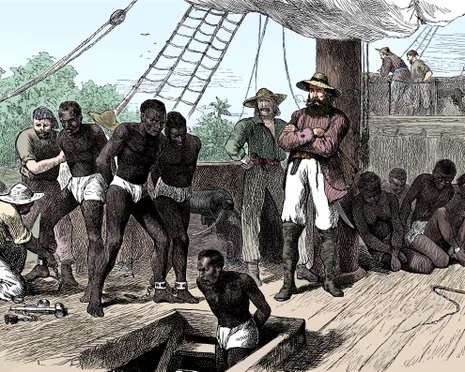
In recent years, international and regional bodies, including the United Nations and the African Union, have advanced resolutions that classify the transatlantic slave trade as the greatest crime against humanity. The intention is clear. It seeks to affirm historical truth, honour the memory of millions who suffered, and correct long-standing distortions about the scale and brutality of that system.
There is no dispute about the gravity of that history. The transatlantic slave trade was industrial in scale, dehumanising in method, and enduring in consequence. It uprooted societies, weakened institutions, and left scars that remain visible in economic structures, social realities, and collective memory. To name it for what it was carries moral weight. It has educational value. It creates a shared language through which history can be understood and acknowledged.
Yet once the statements are issued and the applause fades, a more difficult question emerges.
What follows?
Resolutions, by their nature, are declaratory. They signal position. They define a moral stance. But they do not repair a broken clinic, restore a polluted river, or reform a failing institution. There is always the risk that such declarations become ends in themselves. They create the impression of action while leaving present conditions largely untouched. In that sense, they often settle into a familiar pattern. Strong language. Careful drafting. Minimal change.
There is also an uncomfortable but necessary layer of introspection. The transatlantic slave trade did not operate as a one-sided enterprise. It evolved through a network of actors, including African intermediaries who participated in the capture and sale of fellow Africans. This does not diminish the central role of European demand and organisation. It does, however, remind us that history is rarely simple. Responsibility, even if uneven, was shared at points along the chain.
That honesty should not lead to blame alone. It should lead to reflection.
How do we avoid repeating patterns of exploitation, whether imposed from outside or enabled from within?
The present offers its own answers, and they are not comforting.
In Ghana, illegal mining continues to destroy river bodies, poison farmlands, and threaten public health. Forest reserves are depleted. Water systems are compromised. This is not a problem inherited from centuries ago. It is happening now, under the watch of modern governments, with full knowledge of its consequences.
At the same time, the health sector continues to struggle with basic capacity. The so-called “no bed syndrome” remains a reality. Patients are turned away. Lives are lost. Families are left to navigate a system that cannot always respond when it is needed most.
These are not historical wounds. These are present failures.
There is also a visible contradiction that weakens public confidence. Leaders who speak forcefully about past injustice often rely on the very systems they criticise. They travel abroad for medical care. They educate their children outside the continent. They seek comfort in systems that function, while the systems they oversee remain underdeveloped.
If dignity is the goal, it must be built at home.
If self-reliance is the ambition, it must be reflected in investment and priority.
Historical reckoning is necessary. It has value. But it is not enough.
A declaration about the past must be matched with discipline in the present. Without that connection, it risks becoming ceremonial. A performance that sounds powerful but leaves little behind.
If one were to be candid, even slightly cynical, one might say the entire exercise risks becoming much ado about nothing. A well-organised talk shop. Delegations travelling across continents, delivering speeches, issuing statements, and returning home to systems that remain unchanged.
The cost of those travels, the allowances, the logistics, the time spent preparing and presenting, could address pressing needs at home. It could improve hospital infrastructure. It could strengthen enforcement against illegal mining. It could fund practical solutions to problems that affect lives daily.
Instead, we gather, we speak, we declare.
Meanwhile, rivers continue to be polluted. Forests continue to be destroyed. Patients continue to be turned away because there are no beds.
Enough of the performance.
Whether it is called the greatest crime or not, it remains in the past. What confronts us now is a different kind of failure. One that is visible, immediate, and preventable.
A system that allows environmental destruction to continue unchecked.
A system that cannot provide basic health care to its people.
In this day and age, that failure demands more attention than any declaration about history.
Action is needed.
Because if we cannot protect our water, preserve our land, and care for our people, then no resolution, however well worded, will save us from ourselves.