
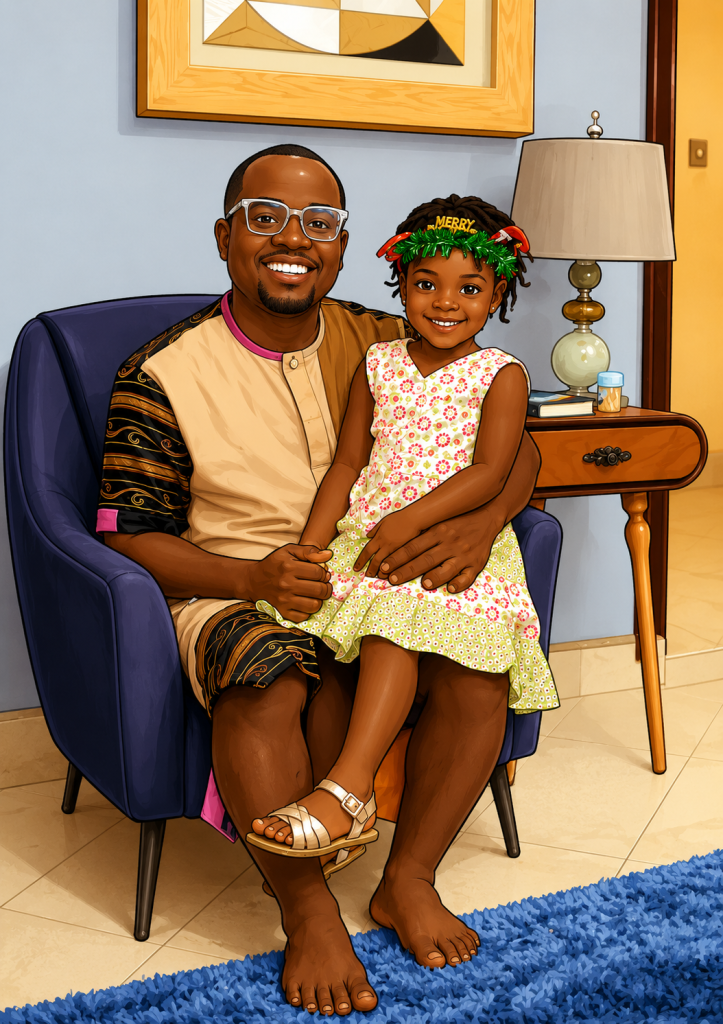
There is a particular stretch of road between school and home that has become, without either of us planning it, the most honest interview I face all week. Every afternoon I pick up my daughter and her younger brother, and before we have even left the school gate, the questioning begins. How was your day? What did you learn? Who annoyed you today and why was it, without exception, someone else’s fault?
Then, once the small talk is exhausted, the real business starts. The demands.
I do not know if every parent goes through this, or if I am simply the unlucky one who has never learned to say a clean no. My children do not ask for toys the way I remember asking for toys. They ask for an aeroplane. Not the small plastic one from the shop. The actual aeroplane. A horse follows shortly after, then a lion, offered with the same casual confidence someone might use to ask for a second helping of rice. And I, for reasons I am still trying to understand about myself, agree to all of it. Yes, we will get the aeroplane. Yes, the lion is on the list. It buys me ten minutes of peace, and I have made my peace with the fact that I will spend the rest of their childhoods making promises no bank on earth would let me keep.
But this particular afternoon was different, because this was not about aeroplanes or lions. This was about my credentials.
My daughter had been taught at school about the first nurse in history, and as she often does after a good lesson, she came to the car ready to test me. This is our unspoken arrangement. She learns something new, and I am expected to either already know it or be suitably impressed when she teaches it to me. It is, I suspect, the closest thing she has to marking her father’s homework.
She asked her question. I did not know the answer.
I want to tell you I recovered with the smooth improvisation of a man who holds a doctorate, but I did not. I fumbled. She watched me fumble. And then, in a silence far more devastating than any protest she has ever staged over a toy she didn’t get, she simply let it go. No argument. No follow-up. Just a quiet six-year-old filing the moment away somewhere I would not hear from again for several hours.
The following morning, her mother was driving them to school, and from the back seat came a question that, I am told, arrived with no warning at all.
“Mum, is Daddy really a doctor?”
Her mother, sensing nothing unusual, answered honestly. Yes, she said, but not a medical doctor. A book doctor.
And this, apparently, is where the case against me was formally opened.
“That is where I have a problem,” my daughter announced, with the gravity of a judge delivering a verdict. How could a book doctor not know something as simple as the first nurse in history? And then, in what I can only describe as prosecutorial thoroughness for a girl in stage one, she began recalling, one by one, every previous question I had failed to answer correctly. Not vaguely. Specifically. As though she had been keeping a file.
I was not in the car for any of this. I only received the full transcript later, secondhand, the way a man learns he has lost a court case he did not know was being tried.
I have thought about that morning often since, mostly laughing, but also genuinely reflecting on what it says about the children this generation is raising us to become. Because that is really what is happening, whether we admit it or not. They are raising us as much as we are raising them.
Children today do not automatically defer to a title the way earlier generations might have. My daughter has no functioning concept of the difference between a PhD and a stethoscope, and honestly, why should she. To her, doctor means someone who knows things, all things, on demand, and if you cannot answer a simple question about a nurse from history, the label itself becomes suspect. There is something wonderfully unforgiving about a six-year-old’s logic. She is not impressed by degrees. She is impressed by answers.
They also, I am learning the hard way, keep receipts. My daughter did not forget that first unanswered question. She stored it, cross-referenced it with the next one, and eventually built a case strong enough to present to her mother in a moving vehicle before eight in the morning. If this is the generation growing up with instant access to information, constant questions, and very little patience for adults who cannot keep up, then perhaps the rest of us had better start studying harder, not to impress our colleagues, but to survive cross-examination from our own children.
I have since made my peace with not knowing everything, which is, I suspect, a lesson worth more than any degree. My daughter taught me that being an expert in one room does not make you an expert in every room a child chooses to walk you into, and that the healthiest response to being caught not knowing something is not embarrassment but curiosity. I looked up the first nurse in history that same evening. Florence Nightingale, since you, unlike my daughter at the time, are asking.
As for the aeroplane and the lion, those remain, diplomatically, still under review.
Good read!
Hahahahaha Lady did a good job 🤣🤣🤣
Really good read. I can’t stop laughing as it reminds me so much of my children
She’s a critical thinker and her thought pattern very interesting 👍