
Ghana’s political culture has become trapped in a cycle of slogans, short-term gains, and election-driven gestures. Policy has increasingly given way to performance. What matters is not what works, but what can be named, branded, and sold to voters before the next election cycle begins.
Winning an election no longer signals the start of governing. It signals the start of the next campaign. From the very day a president is sworn into office, the ruling party begins positioning for the next contest. At the same time, the opposition offers no grace period for thoughtful scrutiny. Every action of the new government is declared a failure. Every early success is claimed as an inherited idea. When things go wrong, the refrain is predictable. We warned you.
The ruling party behaves no differently. Credit is claimed exclusively. Mistakes are defended rather than examined. In this environment, there is little room for patient policy thinking, good-faith opposition, or patriotic criticism. Everything is filtered through electoral advantage.
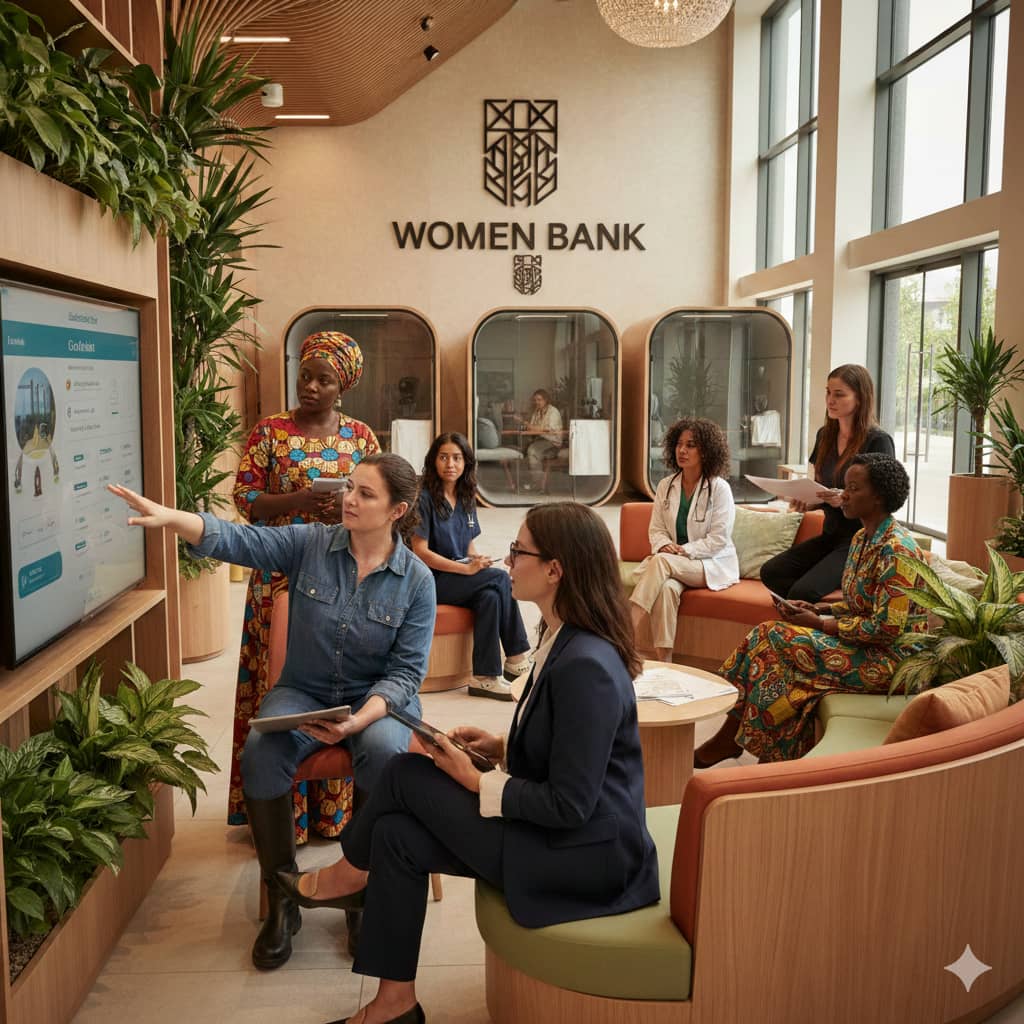
It is within this context that the proposal for a Women’s Bank must be examined.
I want the initiative to succeed. Ghana needs more effective support systems for women entrepreneurs, traders, and professionals who remain excluded from formal finance. That is not in doubt. What is in doubt is whether creating a new bank, defined primarily by gender and political branding, is the right response.
We have seen this approach before. New institutions are announced with fanfare. Buildings are acquired. Boards are appointed. Bureaucracies are formed. Over time, the original purpose fades, costs rise, and outcomes fall short of the promise. Failure in such cases is rarely dramatic. It is slow, administrative, and quietly expensive.
The central question must be asked plainly. Do we need to gender a bank for women to access finance? Does naming a bank after women make credit more affordable, more sustainable, or more responsibly managed? Will loans be repaid simply because the institution is called a Women’s Bank? And if all staff are women, as has been suggested, what problem does that solve beyond symbolism?
Financial inclusion does not fail in Ghana because of names. It fails because of weak credit systems, poor risk assessment, limited financial literacy, and inconsistent policy support. None of these challenges are automatically resolved by creating a new institution.
If the objective is to support women, there are simpler and more effective options. Government could have created dedicated women-focused desks within existing banks. These desks could be backed by partial guarantees, tailored products, and clear performance targets. The infrastructure already exists. The expertise already exists. The regulatory framework already exists. The cost of setting up parallel structures could instead have gone directly into lending, training, and monitoring.
Such an approach would reduce bureaucracy, speed up implementation, and improve accountability. It would also avoid the risk of turning a serious development challenge into a political monument.
The suspicion many people hold is that this initiative is less about policy design and more about campaign fulfilment. A promise was made, so it must be delivered in its most visible form, regardless of cost or efficiency. When politics works this way, the country pays twice. First in wasted resources, and later in disillusionment.
Women do not need symbolic institutions. They need access, fairness, consistency, and respect within systems that already shape the economy. Empowerment is not achieved by labels but by outcomes.
If the Women’s Bank succeeds, it will not be because of its name. If it fails, the reasons will be familiar. We have seen them before. The tragedy would be learning nothing from that history.

Ghana deserves politics that thinks beyond the next election. Our women deserve policies that work, not slogans that sound good.